
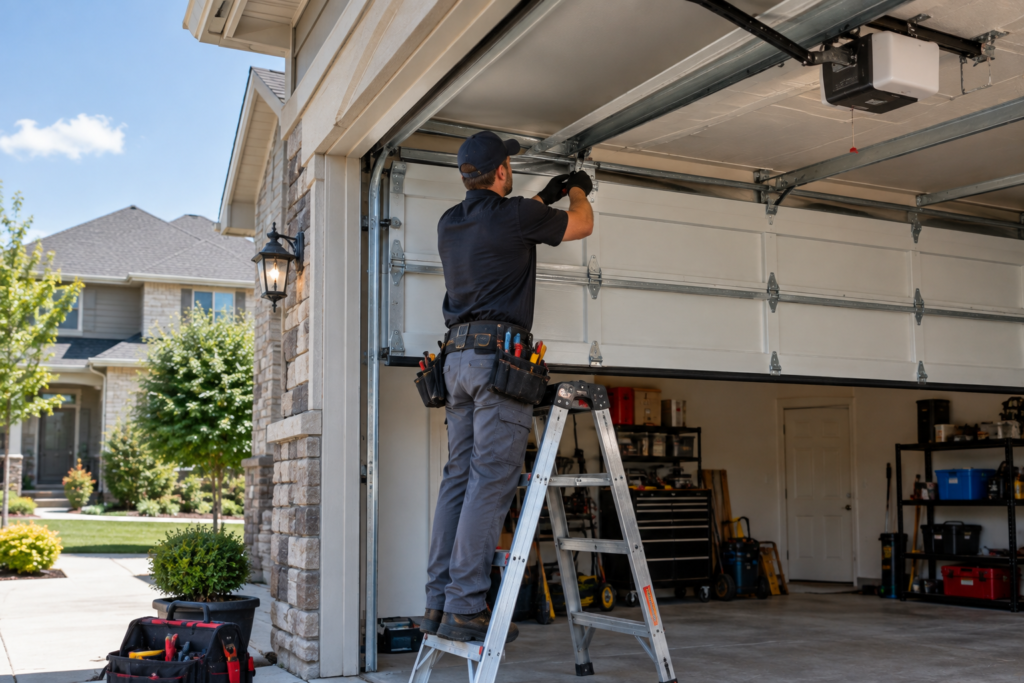
You usually notice a garage door problem at an inconvenient time.
Maybe you are already late for work and the door only opens a few inches. Maybe you hear a loud snap from the garage and suddenly the door feels impossible to lift. Or perhaps nothing dramatic happens at all. The door just starts making more noise every few weeks until you finally decide something needs to be done.
The difficult part is figuring out what actually needs fixing.
A garage door has quite a few moving parts. Springs, cables, rollers, hinges, tracks, and the opener all have different jobs. A problem with one of them does not necessarily mean the whole door has reached the end of its life.
Look at the Problem Before Looking at the Price
Start with the behavior of the door.
Open it normally and pay attention to what happens. Does it move smoothly? Does one side seem to rise faster than the other? Does it stop before reaching the top? Does the opener run while the door stays in place?
Even the sound can be useful.
A new grinding, scraping, popping, or rattling noise is worth investigating. Garage doors make some noise naturally, especially older ones, but a noticeable change usually deserves a closer look.
You do not need to diagnose the problem yourself. In fact, guessing the failed part can sometimes send you in the wrong direction. Just describe what you have noticed when you call a technician.
A Spring Can Fail Without Ruining the Door
Garage door springs eventually wear out. They go through a large number of opening and closing cycles, and they do not last forever.
When spring breaks, the change can be obvious. The door may suddenly become much heavier. The automatic opener might run without being able to lift it. In some cases, there is a loud bang when the spring breaks.
This is where garage door spring replacement may solve the problem without requiring a new door.
Look at the door itself before making a bigger decision. If the panels are straight, the tracks are in reasonable condition, and the other hardware is not badly worn, replacing the broken spring may be all that is necessary.
One warning is important here. Do not try to remove or adjust a loaded garage door spring just because there is a repair video online. These springs store a lot of energy, and a mistake can cause a serious injury.
There Comes a Point When Repairing an Old Door Gets Expensive
Now consider a different situation.
Your garage door is several years old. One roller has already been replaced. The spring has failed before. The panels have dents. The bottom section has started showing rust. The opener is noisy, too.
You could keep replacing individual parts.
But add up the costs.
At some point, putting another repair into an aging system may not be the best use of your money. This is when garage door replacement becomes worth discussing.
Replacement can also make sense after major damage. A vehicle impact, severe storm, or other accident can leave the door badly bent. Sometimes the damage extends beyond the panel that is visibly damaged.
That does not mean every dent requires a new door. It means the complete system should be looked at before you decide.
The New Door Has to Fit More Than the Opening
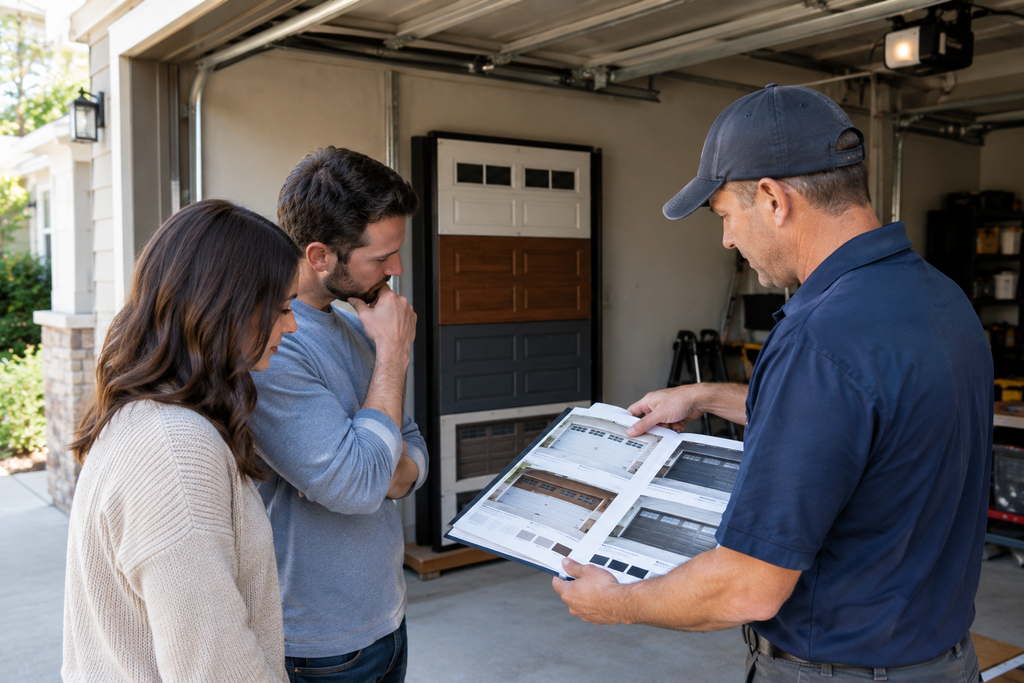
When people shop for a replacement door, they often start with the appearance.
That is understandable. A garage door is a large part of the front of many homes.
But there are practical questions too.
How heavy is the new door? Does the garage connect directly to the house? Do you use the garage as a workspace? Is insulation important? Will the existing opener handle the new door properly?
These questions matter because a garage door is part of a working system. The door, opener, springs, tracks, and other hardware have to work together.
A door that looks great but is poorly matched to the existing setup is not a good replacement.
Installation Is More Than Hanging a Door
A proper garage door install involves several steps.
The old door may need to come down first, along with hardware that cannot be reused. The opening is checked before the new tracks and hardware are installed. The new panels are assembled, springs and cables are fitted, and the opener is connected or adjusted if it is being kept.
Then comes the part that should not be rushed.
The installer needs to test the door.
It should travel properly, stay balanced, and respond correctly to the opener. Safety features also need to be checked. If the door reverses unexpectedly, drags against the track, or sits unevenly when closed, something needs attention.
A new door should not simply look good when the technician leaves. It should operate properly.
An Old Opener Can Change the Decision
Your garage door and opener may not be the same age.
You could have an older opener that has been working with the previous door for years. If you are installing a new door, have the opener checked rather than automatically assuming it can stay.
Sometimes it is perfectly fine.
Sometimes it is already struggling with the existing door and is not worth carrying over to the new one.
The same goes for tracks and other hardware. Some components may be reusable. Others may be too worn to justify keeping.
Ask before the installation begins so you know what is included.
What About a Door That Is Just Noisy?
Noise alone does not tell you what has failed.
A squeak may come from a hinge. A grinding sound could involve a roller or track. A rattling noise may be related to loose hardware.
This is why spraying lubricant on every moving part is not always the answer.
If the door has become noticeably louder, watch it while it operates. Look for movement that seems uneven or unusual. If something appears bent, loose, or damaged, have it checked.
A little noise may be normal for an older system. A sudden change is more useful information.
If You Need a Repair, Explain What Happened
When searching for fix garage door near me, you will probably find plenty of companies offering repairs.
When you call, give them useful information.
Tell them what happened and when you first noticed it. Mention whether the door opens manually. Tell them if the opener makes a noise. If you heard a loud bang before the door stopped working, mention that too.
This is much more helpful than simply saying, “My garage door doesn’t work.”
It also gives the technician a better idea of what to inspect when they arrive.
Get a Straightforward Estimate
Before agreeing to work, ask what you are actually paying for.
For a repair, the estimate should identify the failed component and explain whether labor is included. If a spring, roller, cable, or opener part needs to be replaced, ask what part is being installed.
For a replacement, ask whether the quote covers removal of the old door, disposal, new hardware, installation, and testing.
Do not compare prices until you know you are comparing the same work.
A cheaper quote is not necessarily cheaper if it leaves several necessary items out.
Sometimes Waiting Makes the Problem Worse
A garage door does not need to be completely broken before you deal with it.
If the door has started shaking, becoming unusually heavy, closing unevenly, or making a noise it never made before, there is no reason to ignore it for months.
That does not mean you should immediately order a replacement.
It simply means the problem is worth checking while the door still works.
You may discover that a relatively small repair is enough. Or you may find that the door has several worn components and replacement makes more financial sense.
Either answer is better than guessing.
The Right Choice Depends on the Door in Front of You
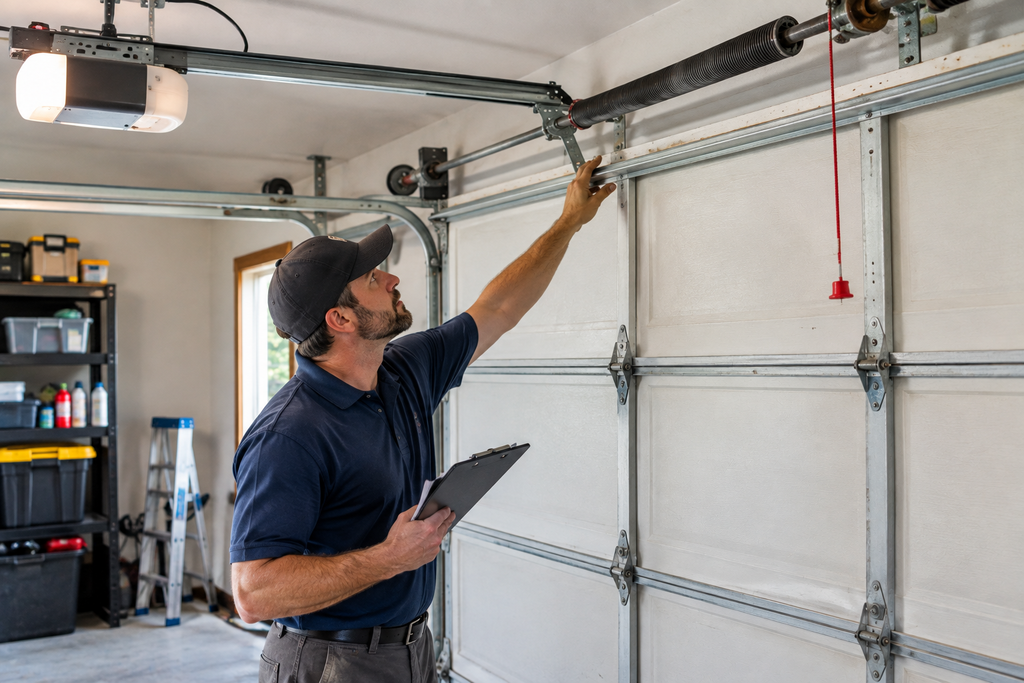
There is no universal rule saying an old garage door must be replaced or that every broken part should be repaired.
Look at the condition of the door, the hardware, the opener, and the cost of keeping everything running.
A good repair can give a solid door several more years of use. A badly worn system may be better replaced rather than repaired one component at a time.
The important thing is to understand what has actually failed before spending money.
FAQs
Can a broken garage door spring be replaced without replacing the door?
Yes. If the door and other components are still in good condition, replacing the broken spring may be all that is needed.
How do I know when garage door replacement makes sense?
Look at the overall condition rather than one damaged part. Extensive damage, repeated repairs, worn hardware, and an aging door can make replacement more practical.
Can an existing opener be used with a new garage door?
Sometimes. The opener should be checked for condition, lifting capacity, and compatibility with the new door before installation.
How long does a garage door install take?
A standard installation can often be completed within a few hours. More complicated jobs may take longer if old hardware needs removal or additional repairs are required.
Should I repair a noisy garage door or replace it?
Noise by itself does not mean the door needs replacement. A technician can identify whether the noise is coming from a roller, hinge, track, spring, or another component before you decide what to do.