
There is a particular moment when you start wondering about your ductwork.
You take the vent cover off because you noticed dust collecting around it. You shine your phone flashlight inside and see some dirt. Then you start thinking about everything you cannot see. How much is inside the rest of the system? Has it been there for years? Does it need to be cleaned?
It is easy to go down a rabbit hole once you start looking.
The good news is that a little dust around a vent does not automatically mean there is a serious problem. Your HVAC system moves a lot of air through the house, so some dust is expected. What matters is the condition of the ductwork and whether there is an actual reason to have it cleaned.
A quick look around the house can tell you a lot
Before calling anyone, walk around and pay attention to the vents.
Is there dust building up unusually fast? Is there debris around a register that keeps coming back after cleaning? Does one vent seem to have much weaker airflow than the others?
Now check the return vents.
These often collect more dust because they pull household air back toward the HVAC system. A dirty return grille is not necessarily a sign that the ducts are filthy. It does, however, give you a reason to look a little closer.
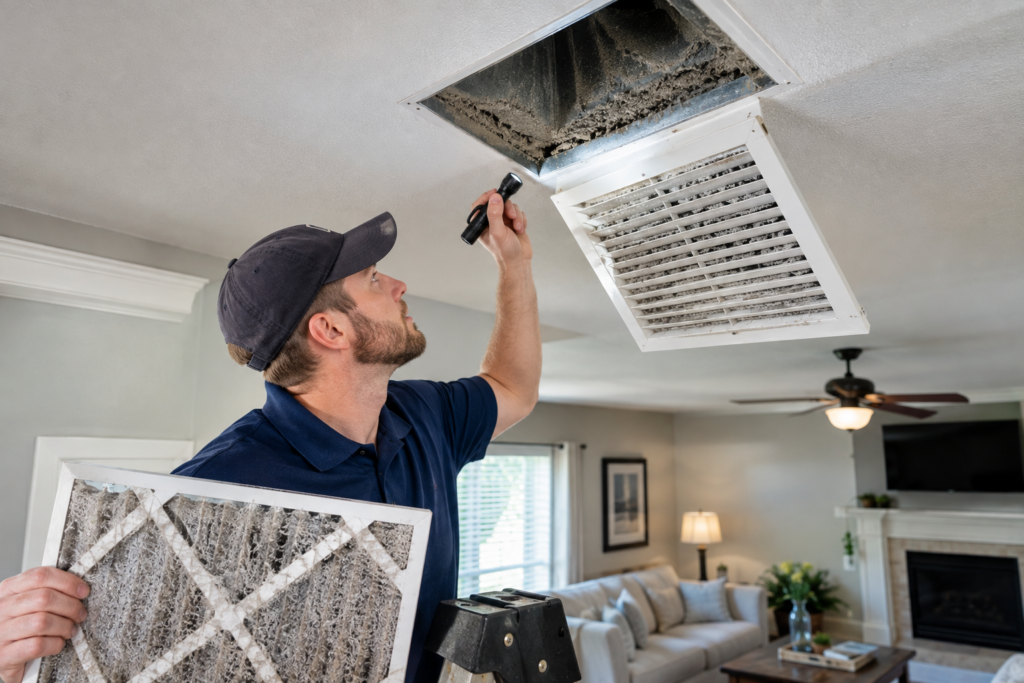
If you can safely remove a vent cover, use a flashlight to inspect the accessible area. You are not trying to diagnose the entire HVAC system from your living room floor. You are simply looking for anything obvious.
Heavy buildup is worth mentioning to a professional. A small amount of ordinary household dust probably is not.
Think back to the last big project you did
Your ductwork may have been fine until something happened inside the house.
Maybe you remodeled the kitchen. Maybe someone cut drywall, sanded joint compound, replaced flooring, or removed old cabinets. Construction dust has a way of finding places you would rather it did not.
If the HVAC system was operating while the work was being done, checking the ductwork afterward is reasonable.
This is where duct cleaning can sometimes make sense. The point is not that every renovation requires it. A small paint job and a six-month remodel are two very different situations.
Look at the amount of work that was done and how much dust was produced.
Raleigh houses are not all built the same
One homeowner may have ductwork running through an attic. Another may have sections tucked into a crawlspace. Some systems have been replaced over the years, while parts of the original ductwork remain.
That matters if you are trying to figure out why a system is behaving differently.
For example, a bedroom that never seems to cool properly may have an airflow issue. The cause could be a duct leak, poor insulation, a blocked register, or something related to the HVAC equipment.
It could be dirty ductwork, too.
But there is no good reason to pick one explanation before anyone has looked at the system.
Do not overlook the filter
This is probably the easiest thing to check.
Pull out your HVAC filter and see what it looks like. If it is loaded with dust, replace it according to the requirements of your system.
Then see whether anything changes.
A filter is designed to collect airborne particles before they move farther through the system. So a dirty filter is not proof that your ducts are dirty. In fact, seeing dust on the filter means the filter is catching something.
If the filter is clean but a room still has weak airflow, there may be another explanation.
If you have replaced the filter and the problem remains, that is a better reason to have the system checked than simply seeing dust on the old filter.
Smells can be misleading
A strange smell coming from a vent can make anyone suspicious of the ductwork.
Sometimes the ducts are involved.
Sometimes they are not.
An odor can come from the HVAC equipment, moisture, a drain problem, accumulated material, or another source entirely. If the smell appears only when the system starts and then disappears, tell the technician exactly when you notice it.
Small details can help.
The same goes for noises. A new rattling, whistling, or airflow sound may have nothing to do with dirt inside the ducts.
What happens when a company inspects the system?
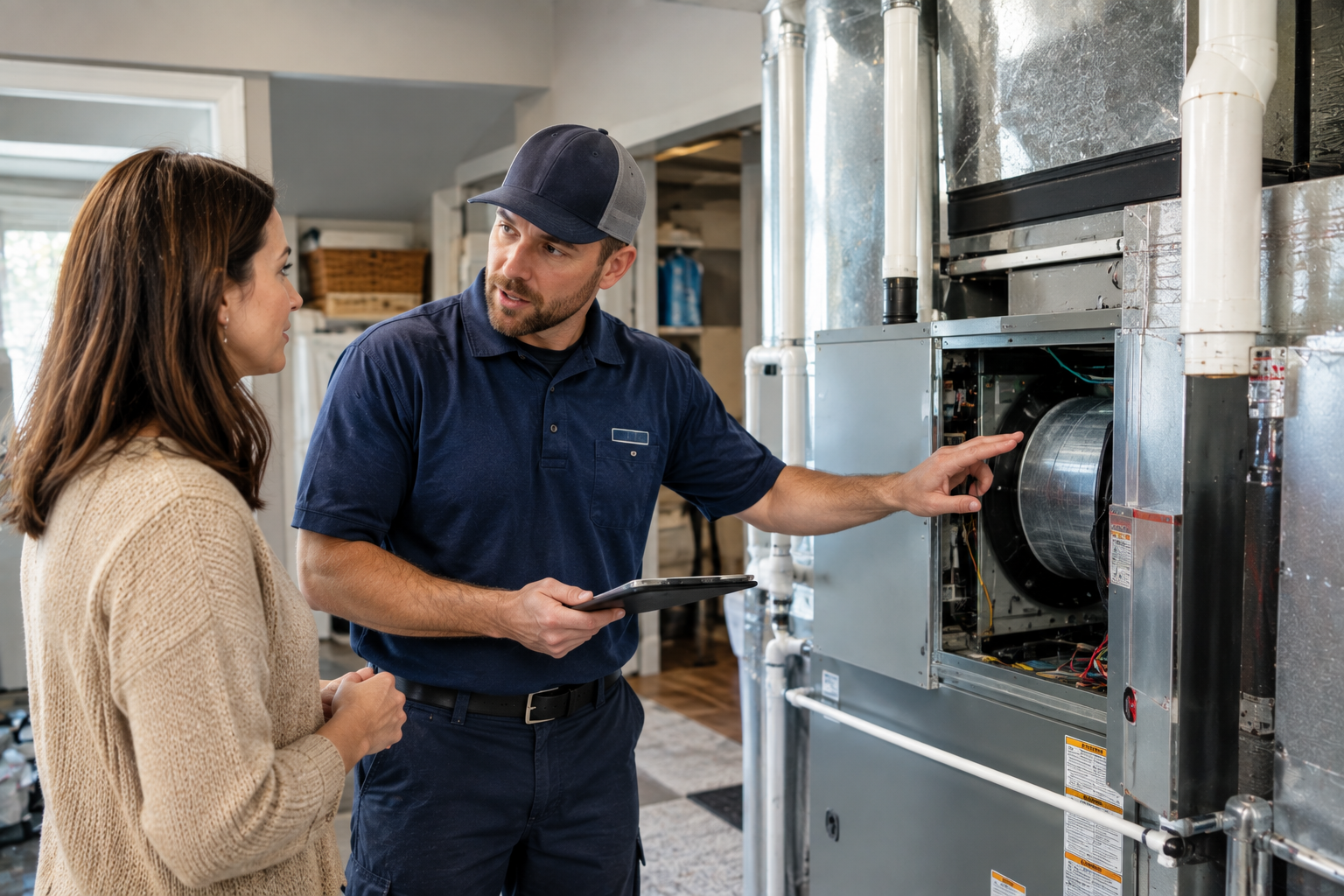
This is something worth asking about before you schedule air duct cleaning services.
A proper conversation should start with the condition of your system, not with a sales pitch.
Ask what the technician will inspect. Ask whether both supply and return ductwork are considered. Ask what happens if the technician finds that the ducts are already reasonably clean.
That last question tells you quite a bit.
You want a company that is willing to say, “You probably do not need this right now,” when that is the honest answer.
If cleaning is recommended, ask what was found. If there is visible buildup or another specific issue, the explanation should be straightforward.
You do not need a dramatic description of everything that might possibly be wrong with your house.
Moisture is a separate issue
There is one thing I would take more seriously than ordinary dust.
Moisture.
If you find damp insulation, water around the HVAC equipment, staining, or moisture near accessible ductwork, do not assume cleaning alone will solve it.
Find out where the moisture is coming from.
A cleaning might remove existing material, but it will not stop a leak or condensation problem from happening again. The source has to be addressed.
This can be particularly important when ductwork passes through an attic or crawlspace.
How often should you actually clean the ducts?
There is no number that works for every Raleigh home. If someone tells you that every house needs its ducts cleaned every two or three years, ask why.
Homes have different systems. Families have different habits. Some properties have gone through renovations. Others have not. Some ductwork stays clean for long periods, while another system may develop a problem much sooner.
The calendar alone cannot tell you what is happening inside your ducts.
A specific reason is more useful. Visible debris. Significant contamination. Certain renovation work. Pest activity. Moisture-related problems. Those are things worth investigating.
Choosing a local company
If an inspection shows that cleaning is appropriate, take your time when comparing air duct cleaning in Raleigh NC.
Do not choose a company only because its advertisement has the lowest starting price. Ask what that price actually covers.
Some systems are easy to access. Others are not. The size and layout of the ductwork can also affect the work involved.
Ask whether the company will inspect the system first. Ask what areas are included. Ask whether there are possible additional charges.
And listen to the explanation you receive.
A technician who shows you the problem and talks through the options is giving you something useful. A technician who immediately recommends every available treatment without inspecting anything is giving you a reason to get another opinion.
Sometimes you do not need to do anything
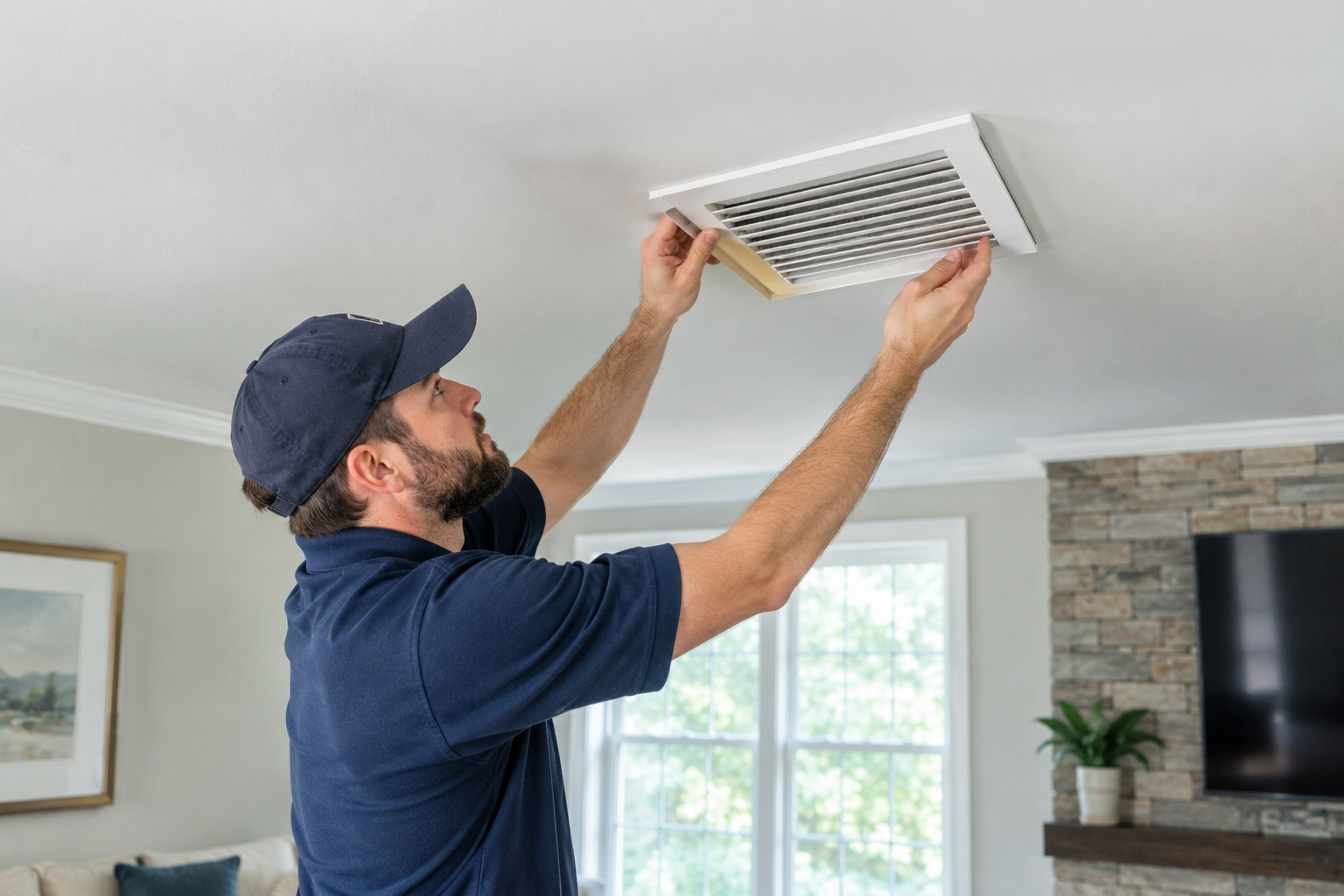
That may sound strange coming from an article about duct cleaning, but it is worth saying.
If your vents are reasonably clean, airflow is normal, the filter is being maintained, and there are no signs of contamination or moisture, there may be nothing urgent to clean.
Keep changing the filter.
Keep the vents clear.
Have the HVAC equipment maintained when necessary.
Pay attention when something changes.
Then deal with the ductwork if there is a real reason to do so.
That approach is usually better than paying for a service simply because someone told you that every HVAC system needs it.
FAQs
Is some dust inside my air ducts normal?
Yes. A certain amount of household dust can accumulate inside ductwork over time. The important question is whether there is excessive buildup or another condition that justifies professional cleaning.
Should I clean my ducts after a home renovation?
It depends on the project. Major work that creates large amounts of fine dust can be a good reason to have the HVAC system inspected. Cleaning should be based on what the inspection finds.
Can a dirty filter make my HVAC system work harder?
Yes. A heavily loaded filter can restrict airflow. Keeping the filter clean and replacing it as recommended is one of the simplest maintenance steps you can take.
Does poor airflow always mean dirty ducts?
No. Duct leaks, blocked registers, insulation problems, blower issues, and other HVAC faults can also cause weak airflow.
Is there a fixed schedule for duct cleaning?
No. There is not one cleaning interval that applies to every home. The condition of the ductwork and specific circumstances in the property are more useful when deciding whether cleaning is necessary.